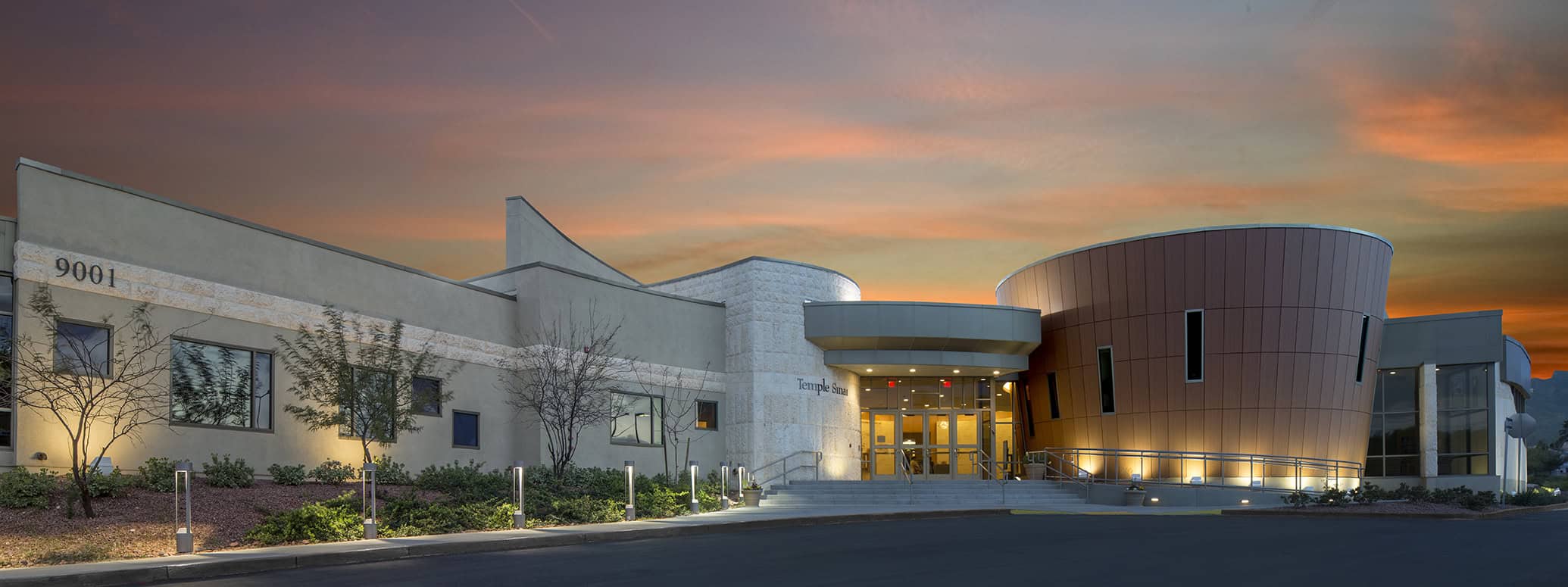
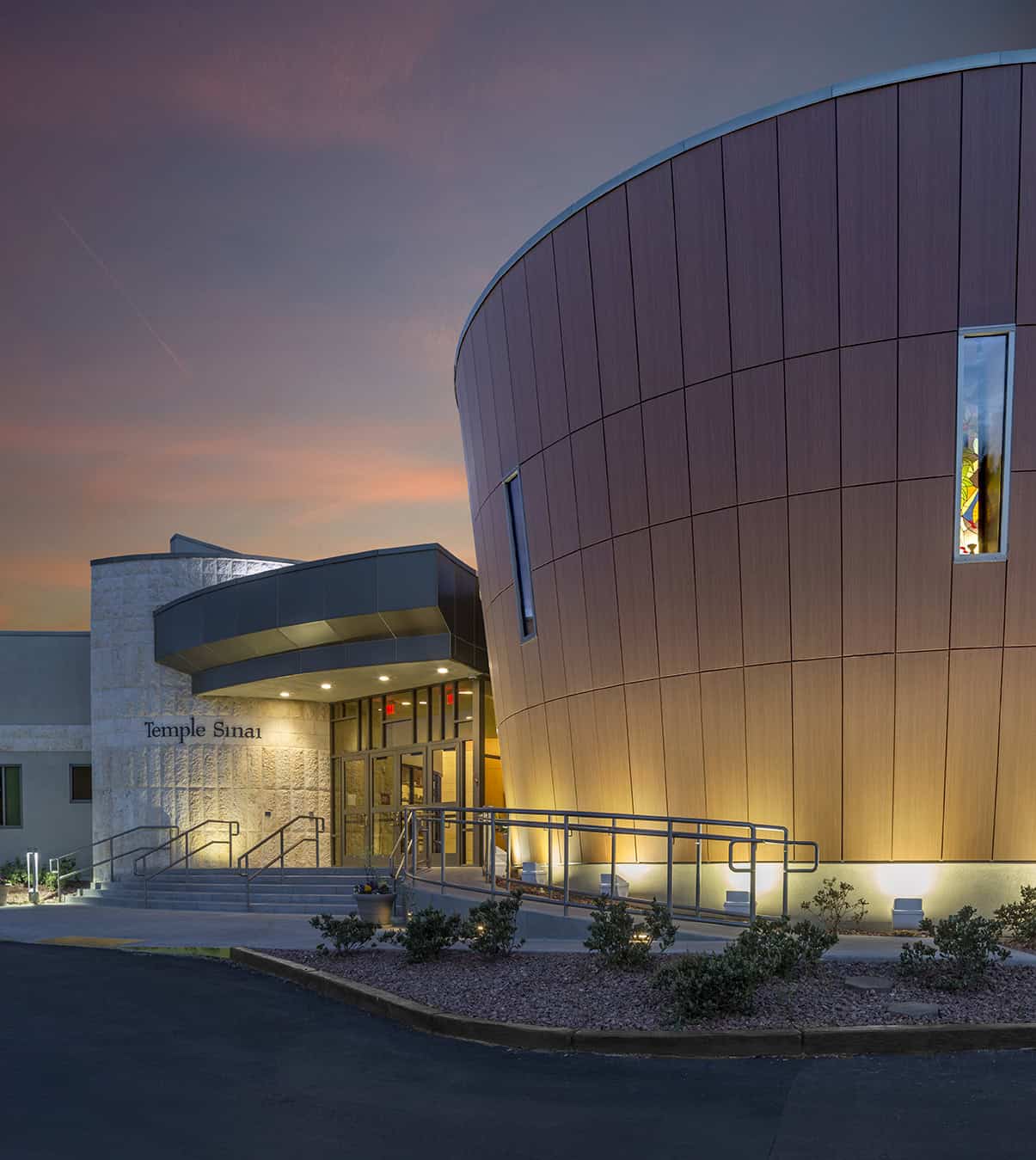
Temple Sinai is a newly constructed synagogue campus defined by light, spatial movement, and a fluid relationship between interior and exterior environments. The architecture is conceived as a sequence of experiences—inviting congregants to move through spaces that shift in scale, volume, and atmosphere while remaining visually and spatially connected.
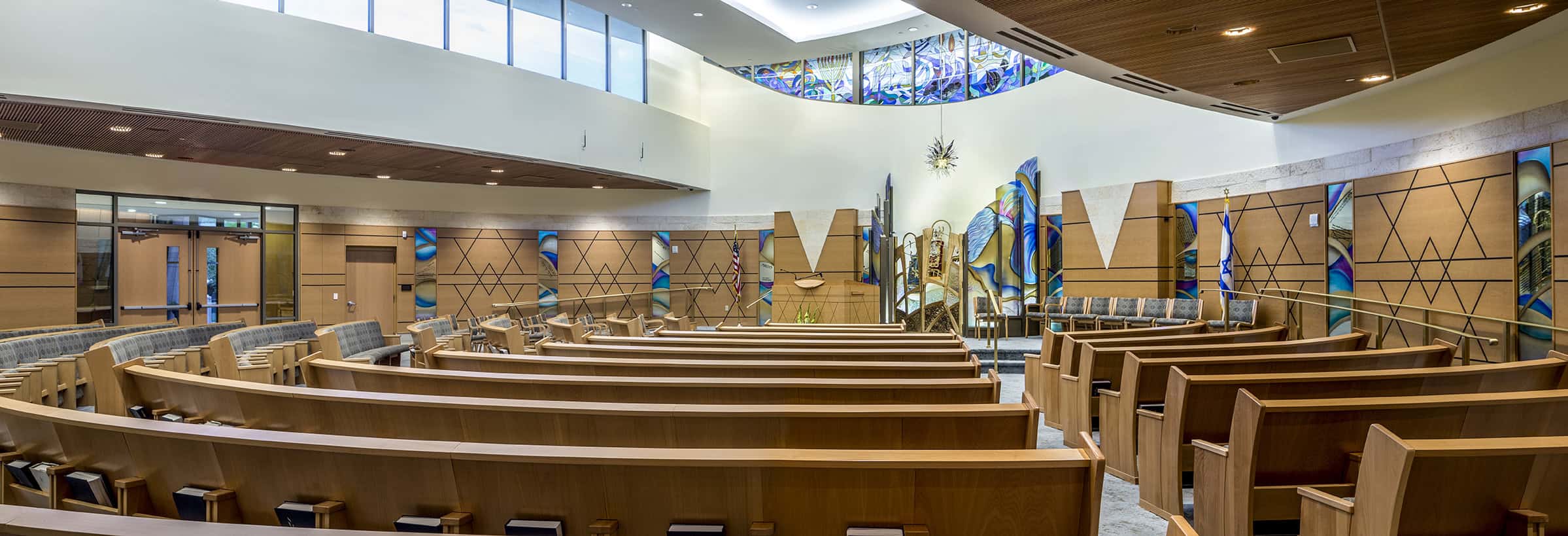
The sanctuary is organized as an in-the-round worship space, emphasizing inclusion, proximity, and shared focus. Natural light plays a central role, entering from carefully positioned openings and shaping the room throughout the day. The ark, bimah, and seating are fully integrated into the architectural form, reinforcing clarity of orientation while maintaining an intimate connection between clergy and congregation. Acoustics, sightlines, and lighting are calibrated to support prayer, music, and communal gathering.
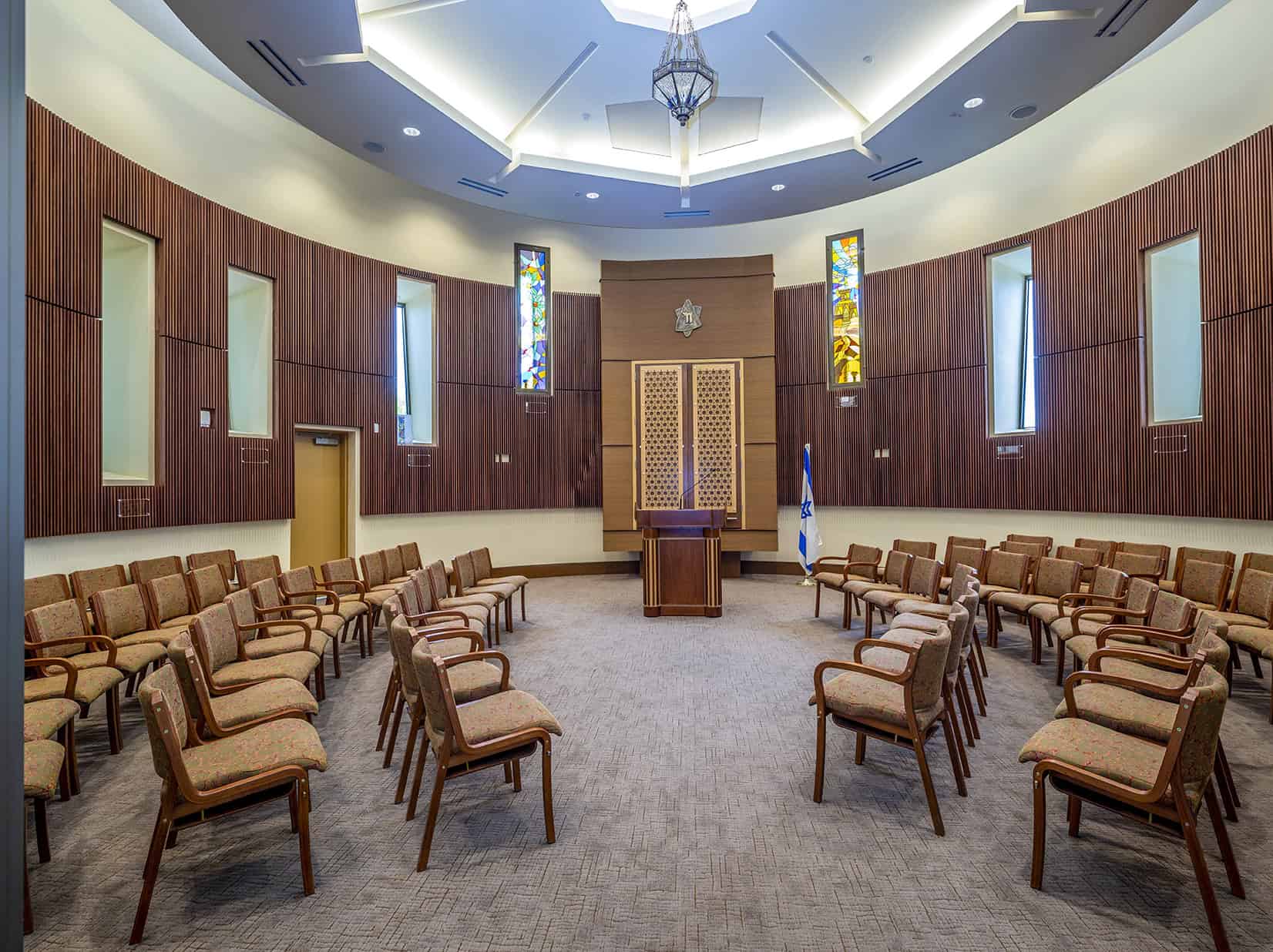
Adjacent to the sanctuary, the chapel provides a more intimate worship environment, defined by softer light, reduced scale, and a strong sense of enclosure. Together, the sanctuary and chapel create a balanced range of worship spaces within a cohesive architectural language.
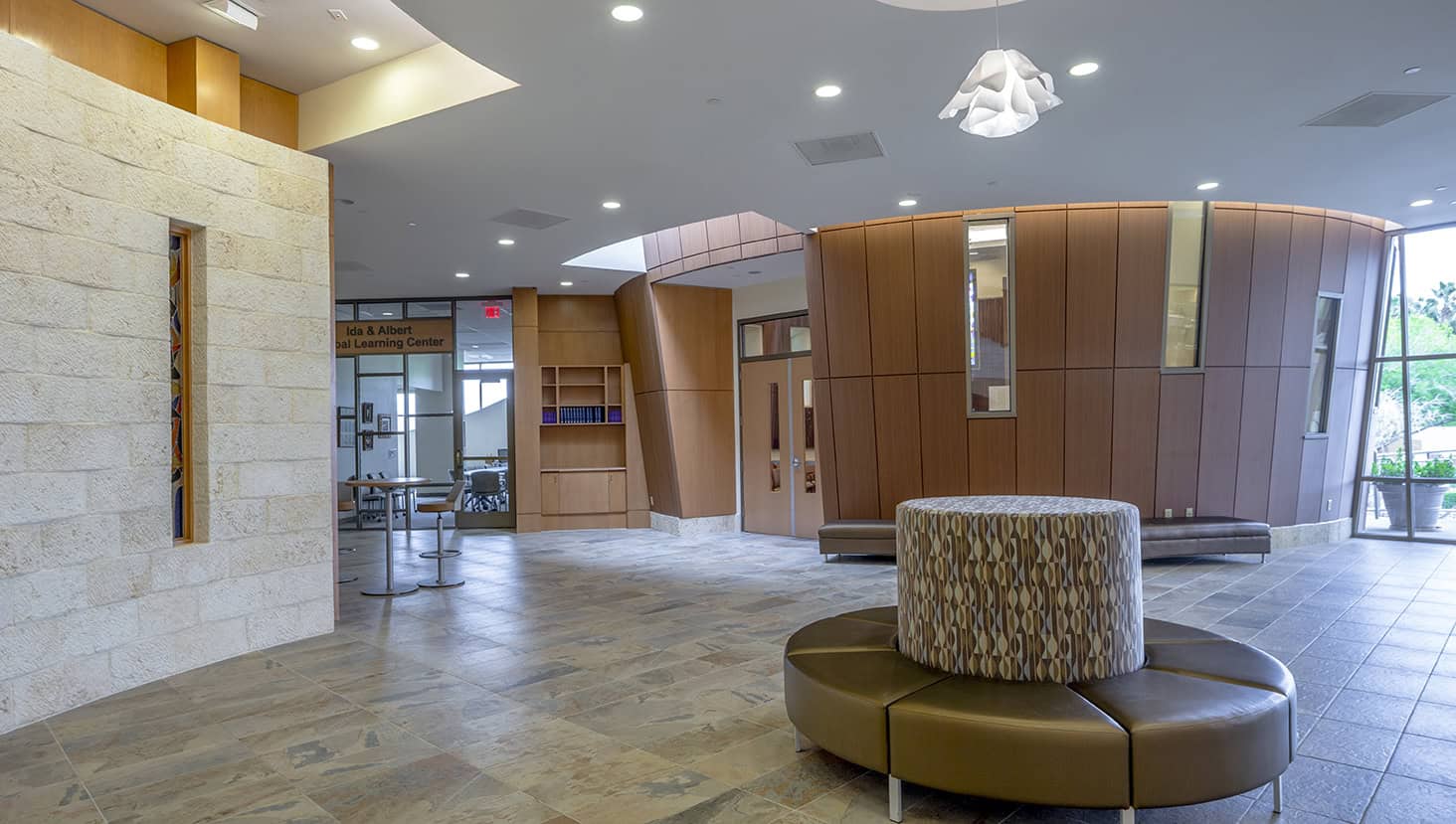
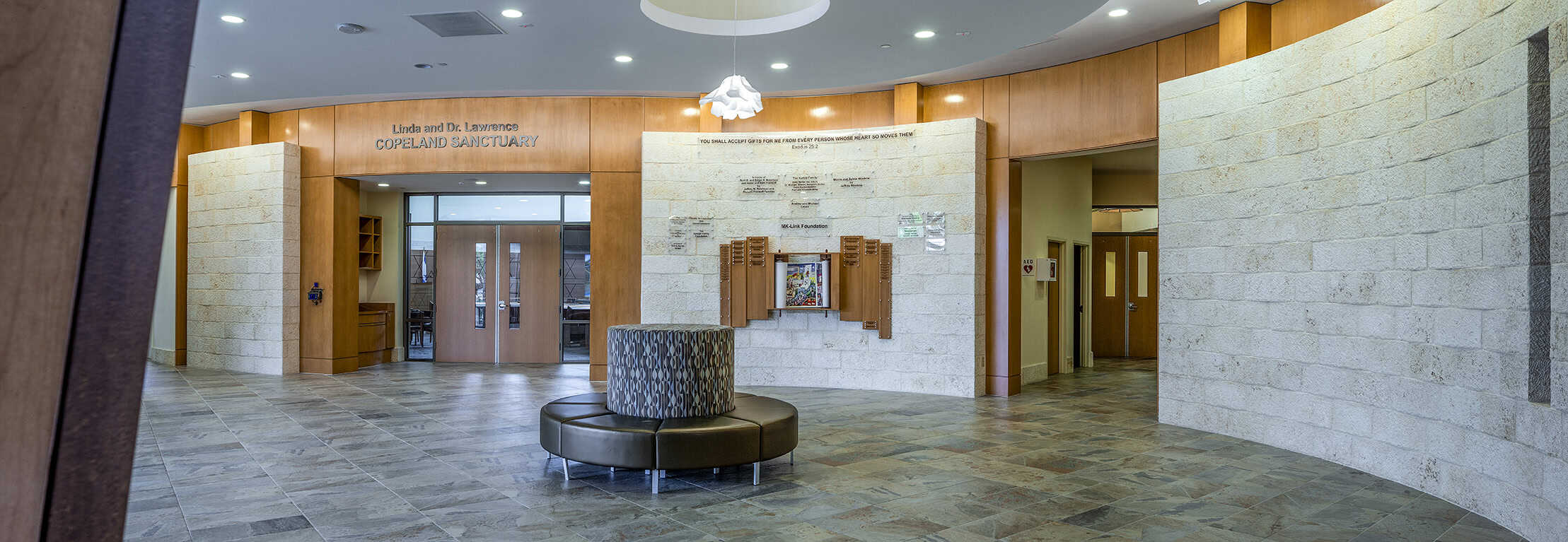
The lobby serves as a dramatic spatial transition, defined by extraordinary volumes, sculptural lighting, and visual connections across multiple levels. This space functions as both a gathering area and a point of orientation, linking worship, education, and community spaces while drawing daylight deep into the building.
Educational spaces extend beyond the building envelope into an outdoor learning campus. Classrooms open directly to exterior rooms and landscaped courtyards, allowing teaching and gathering to flow naturally between inside and outside. These spaces are designed to be active, flexible, and engaging, supporting a wide range of educational and community programs.
Temple Sinai’s architecture is defined by movement—traveling from light-filled gathering spaces to focused worship environments, outward to the landscape, and back again. The result is a contemporary synagogue campus shaped by experience, connection, and a strong sense of place.